Reviewing the Kiss Me I’m Cute SVG for Embroidery
As a designer who spends half my life staring at digitized files and the other half watching needles punch through fabric, I have learned that not every graphic translates well to thread. We often see trending T-Shirt Designs marketed as universal solutions, but the jump from a vector line on a screen to a textured finished product is where the real work happens. Recently, I evaluated the Kiss Me I’m Cute Svg to determine its viability for real-world embroidery projects. This isn’t just about whether the file opens correctly; it is about whether the design holds up under the tension of a hoop and the scrutiny of a customer.
First Impressions: Mood and Visual Personality
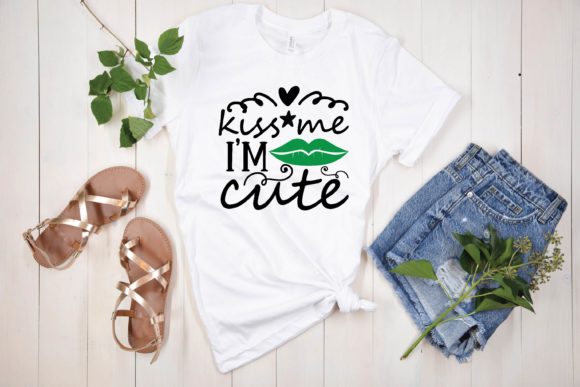
The first thing you notice about this design is its playful, affectionate tone. The phrase "Kiss Me I’m Cute" carries a whimsical energy that appeals to a broad demographic, from parents looking for baby items to adults seeking lighthearted holiday apparel. Visually, the layout suggests a balance between bold lettering and decorative elements. For an embroidery designer, this initial impression raises immediate questions about spacing and detail. Is the font thick enough to support a satin stitch, or will it require a dense fill stitch that might feel stiff on soft fabric? The mood is undeniably cheerful, making it a strong candidate for gift-oriented markets, but the execution determines its professional value.
Real-World Application: From Screen to Stitch
To truly test the Kiss Me I’m Cute Svg, I imagined it in several common production scenarios. The most obvious application is custom apparel. Picture a high-quality cotton sweatshirt. Here, the design needs to breathe. If the letters are too close together, the fabric between them may pucker, ruining the clean look of the sweatshirt embroidery. I also considered its use on a canvas tote bag. Tote bags have a tighter weave, which can handle higher stitch density, but the texture of the canvas can sometimes obscure fine details.
Another compelling use case is baby clothing. For a onesie or a burp cloth, the design must be soft. A heavy, dense stitch pattern on a baby’s chest is uncomfortable and impractical. In this context, the design would benefit from being scaled down significantly or converted into an applique design where fabric fills the bulk of the shape, reducing the amount of thread directly against the skin. This approach not only improves comfort but also adds a tactile dimension that customers love in handmade products.
Navigating Technical Challenges
While the concept is charming, there are technical hurdles to consider before loading this into your machine. Since the source description identifies this primarily as an SVG for cutting machines like Cricut and Silhouette, we must assume it is a vector graphic rather than a pre-digitized embroidery file. This distinction is critical. An SVG defines shapes, not stitches. You cannot simply import an SVG into most embroidery software and expect perfect results without manual digitizing or using an auto-digitize function, which often fails with complex curves.
If you are converting this graphic yourself, pay close attention to the corners of the letters. Sharp angles in a vector file can cause thread breaks or bird nests if not properly programmed with tie-offs and underlay stitches. Additionally, consider the hoop size. If you plan to stitch this on a cap, the curved surface distorts the design. What looks proportional on a flat screen may appear stretched or compressed on a structured hat. Always test on a curved dummy or scrap piece of similar material before committing to a final embroidered patch or cap.
Fabric and Thread Considerations
The success of this design relies heavily on contrast. On dark fabrics, light thread colors will make the text pop, but you must ensure the background fill does not become too dense. Using a running stitch for outlines can help define edges without adding unnecessary bulk. Conversely, on light or white fabrics, choose thread colors that offer sufficient definition. Pastels might look sweet but can get lost if the stitch count is low.
Stabilizer choice is equally important. For stretchy fabrics like jersey knits used in t-shirts, a cut-away stabilizer is non-negotiable to prevent distortion after washing. For woven fabrics like aprons or tea towels, a tear-away stabilizer might suffice, provided the stitch density is moderate. Always test the design on scrap fabric first. Check how the threads interact with the fabric texture. Does the thread sink into plush towels? Does it pull on thin synthetics? These small details define the quality of your custom apparel.
Commercial Viability and Brand Consistency
For Etsy sellers and small shop owners, the Kiss Me I’m Cute Svg offers versatility. It fits well into seasonal collections, particularly around Valentine’s Day or as a year-round cute aesthetic for children’s boutiques. However, professionalism is key. A sloppy stitch-out damages brand trust. Ensure that your final digital embroidery file is optimized for speed and quality. Customers judge the value of a personalized gift by its finish. Loose threads, uneven tension, or misaligned layers signal amateur work.
When creating printable mockups or digital previews for your store, show the design on various backgrounds. Display it on a navy hoodie, a pink baby blanket, and a natural canvas tote. This helps buyers visualize the design assets in their own lives. Remember, while the SVG is compatible with cutting software, selling finished embroidered items requires you to verify the licensing terms. Ensure you have the right to use the design for commercial embroidery projects. Many free or low-cost SVGs are for personal use only, so always read the fine print before listing items in your craft business.
Final Verdict for Designers
The Kiss Me I’m Cute Svg is a promising starting point for creative entrepreneurs, but it is not a plug-and-play solution for embroidery. It requires thoughtful adaptation. Whether you are creating holiday embroidery for gifts or stocking your small shop with everyday essentials, take the time to digitize or adjust the file properly. Test different thread combinations, respect the limitations of your hoop size, and prioritize the comfort of the wearer. By treating this graphic as a raw material rather than a finished product, you can transform it into a high-value asset that enhances your portfolio and delights your customers.