Reviewing Never Postpone What You Can Cancel Svg
As a designer who has spent countless hours digitizing files and testing them on everything from thick denim to delicate baby knits, I approach every new machine embroidery design with a mix of curiosity and skepticism. We have all seen designs that look stunning on a screen but turn into a tangled mess of thread breaks and puckering once the needle hits the fabric. Today, I am taking a close look at Never Postpone What You Can Cancel Svg, a piece of digital art that has been circulating among crafters and small business owners. While the title suggests it is an SVG intended for cutting machines like Cricut or Silhouette, its visual structure offers interesting possibilities for those of us working in thread, provided we approach it with the right technical mindset.
First Impressions and Visual Personality
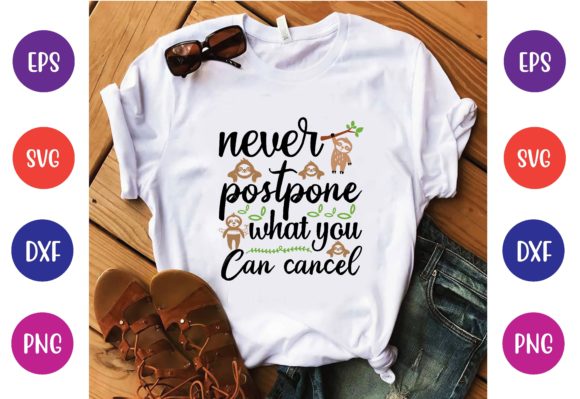
The first thing that strikes me about this design is its bold, declarative nature. The phrase itself carries a mood of modern minimalism and dry humor, appealing to a demographic that values boundaries and self-care. Visually, the typography appears clean and straightforward. For an embroidery project, this is often a double-edged sword. Clean lines are easier to stitch, but they also leave nowhere for errors to hide. If the kerning is too tight or the stroke weight too thin, the final finished product can look cluttered or illegible.
The layout feels balanced, suggesting it would work well as a central chest placement on a hoodie or across the back of a tote bag. It does not rely on intricate shading or complex gradients, which means it translates well to the binary nature of stitching: either the thread is there, or it is not. This simplicity makes it a strong candidate for T-Shirt Designs where readability is paramount. However, because it is marketed primarily as an SVG for cutting, we must consider how these vector paths translate when we convert them into an embroidery file.
Real-World Application: The Custom Sweatshirt Test
To truly evaluate a design, I imagine it in a real-life scenario. Let’s say a client commissions a custom sweatshirt for a friend who is notoriously busy and needs a gentle reminder to prioritize rest. I envision placing this text on a mid-weight cotton blend fleece. In this context, the design’s blocky letterforms would benefit from a solid fill stitch rather than a satin stitch, given the likely width of the characters. A fill stitch provides coverage and durability, essential for a garment that will be washed frequently.
If I were using this as a tote bag design, the stakes change slightly. Tote bags often carry heavy loads, causing the fabric to stretch and distort. Here, the stability of the stitch pattern becomes critical. If the design is too dense, it might cause the canvas to pucker around the edges. If it is too light, the underlying fabric might show through, especially if using light thread on a dark bag. This is where the concept of stitch density becomes a practical concern rather than just a technical setting. I would recommend testing a sample on scrap fabric identical to the final product to ensure the tension holds up under stress.
Navigating Technical Constraints
One must be cautious when adapting a cut-file aesthetic to embroidery. SVGs are resolution-independent vectors, but embroidery machines operate on physical constraints like hoop size and needle penetration. If you plan to use this design on a curved surface, such as a cap or a baby onesie, you need to account for distortion. Small details can get lost in the nap of terry cloth or the stretch of spandex blends. For baby embroidery, I would advise increasing the font size significantly to ensure clarity and reducing stitch density to keep the garment soft against sensitive skin.
Another consideration is the choice between a standard stitch-out and an applique design. Given the bold nature of the text, an applique approach could add a lovely textured dimension. By stitching a running stitch outline, placing a contrasting fabric patch, and then securing it with a satin or zigzag border, you create a layered look that stands out. This method also reduces the amount of thread used, which can be beneficial for large-scale commercial embroidery projects where cost and production time matter.
Enhancing Brand Value and Customer Trust
For Etsy sellers and craft business owners, the quality of your design directly impacts perceived value. A crisp, well-executed embroidery job signals professionalism. When a customer receives a personalized gift featuring this quote, the clarity of the letters reinforces the thoughtfulness of the gesture. Muddy edges or loose threads, on the other hand, can undermine the message. Using high-quality thread colors that contrast sharply with the fabric background enhances legibility and visual appeal. For instance, white thread on navy blue creates a classic, nautical feel, while pastel pink on heather gray offers a softer, modern aesthetic.
It is also worth considering how this design fits into a broader collection. As part of a series of design assets, it can help establish brand consistency. If your shop specializes in witty, mental-health-aware apparel, this piece fits seamlessly. It acts as a conversation starter, increasing buyer engagement and shareability on social media platforms. A well-presented printable mockup showing the design on various garments can help customers visualize the final result, boosting confidence in their purchase.
Practical Notes for the Embroiderer
Before committing to a full production run, here are my top recommendations for working with this type of graphic:
- Test on Scrap Fabric: Always stitch a test sample on the exact fabric type you intend to use. This reveals issues with tension, density, and registration.
- Check Stabilizer Compatibility: Use a cut-away stabilizer for stretchy fabrics like jersey knits to prevent distortion over time. For woven fabrics like canvas or denim, a tear-away may suffice.
- Verify Licensing: Since this is sold as an instant download SVG, confirm whether the license permits commercial use for finished physical goods. Many designers allow selling stitched items but prohibit reselling the digital file itself.
- Inspect Small Details: If the design includes any tiny punctuation or decorative elements, ensure they are large enough to stitch cleanly. Tiny details often break needles or get lost in the fabric texture.
- Contrast is Key: Review your design in black and white to check for value contrast. If the thread color is too similar to the fabric, the message will be lost.
In conclusion, Never Postpone What You Can Cancel Svg offers a compelling visual statement that translates well to embroidery when handled with care. It is not just a collection of pixels or vectors; it is a potential centerpiece for a meaningful handmade product. By respecting the technical limits of your machine and understanding the behavior of your materials, you can transform this digital graphic into a durable, high-quality textile asset. Whether for a holiday embroidery gift or a staple item in your small shop product line, this design holds promise for those willing to put in the preparatory work.