Reviewing Baby’s 1st Christmas SVG for Embroidery
As a designer who has spent countless hours digitizing and stitching out holiday motifs, I approach every new machine embroidery design with a mix of curiosity and caution. The market is flooded with festive graphics, but few translate well from a screen to actual thread. Recently, I evaluated the Baby s 1st Christmas Svg to determine if it holds up under the needle for real-world commercial and personal projects. While the product description highlights its compatibility with cutting software like Cricut and Silhouette, my focus was strictly on how this graphic performs as an embroidery file for tangible goods.
First Impressions: Mood and Visual Personality
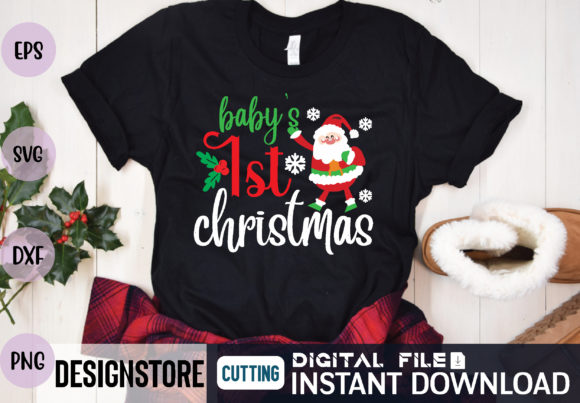
The immediate appeal of Baby s 1st Christmas Svg lies in its simplicity. Holiday designs for infants often suffer from over-complication, trying to cram too many elements into a small space. This design, however, feels balanced. The layout suggests a clean, modern aesthetic that avoids the cluttered look of traditional vintage holiday art. For an embroidery project, this is crucial. Clean lines translate better to stitch paths, reducing the risk of thread breaks or messy jumps.
The visual personality is warm and celebratory without being overly gendered. This neutrality is a significant advantage for T-Shirt Designs and other apparel intended for gift-giving. When I visualize this stitched out, I see it working beautifully on soft, neutral tones like cream, sage green, or slate blue. It creates a mood of gentle celebration, perfect for a newborn’s first holiday season. As a piece of Graphics asset, it serves as a strong foundation for customization, allowing makers to add names or dates without overwhelming the central motif.
Real-World Application: From Digital File to Finished Product
To truly test the viability of this design, I imagined a specific scenario: preparing a custom order for a boutique client who wanted personalized baby embroidery items for a holiday gift set. The client requested a mix of a knit cap and a cotton onesie. Here is where the practical reality of using an SVG-derived design comes into play.
For the sweatshirt embroidery or heavier knit fabrics, the design’s open areas would benefit from a fill stitch that provides coverage without excessive density. On lighter fabrics, such as a cotton tote bag design or a muslin swaddle, the same design might require careful attention to stitch density. If the original vector paths are too close together, converting them directly into an applique design or standard satin stitch could cause puckering. I found that mentally breaking down the shapes helped; the larger elements could handle a satin stitch border, while the interior details might need a simple running stitch to maintain clarity.
This versatility makes it a strong candidate for commercial embroidery shops. Whether you are creating an embroidered patch for a holiday market or stitching directly onto a personalized gift like a pillow cover, the design scales reasonably well. However, scale is everything. What looks crisp on a monitor can become a tangled mess if shrunk below half an inch without adjusting the stitch parameters.
Navigating Fabric and Hoop Constraints
One must be realistic about where this design should not be used blindly. While the description mentions compatibility with various cutting machines, embroidery has different physical constraints. Using this on stretchy fabrics like jersey knits requires a robust stabilizer strategy. Without proper cut-away stabilizer, the tension from the stitches could distort the fabric, ruining the clean lines of the design.
Additionally, consider the hoop size. If you are working with a small 4x4 hoop, you may need to isolate specific elements of the Baby s 1st Christmas Svg rather than stitching the entire composition at once. Curved surfaces, such as caps or baby booties, present another challenge. The design’s layout needs to be centered perfectly to avoid distortion when the item is worn. I advise testing the design on scrap fabric first, especially if you are new to working with textured materials like terry cloth or fleece.
Dark fabrics also pose a visibility issue. If you are stitching white thread on navy blue, ensure your digitizing software allows for proper underlay stitches to prevent the background fabric from showing through the top stitches. This is particularly important for maintaining the professional look expected by customers buying handmade product items.
Commercial Value and Brand Consistency
For Etsy seller accounts and small shop product lines, consistency is key to building trust. A design that stitches out cleanly and reliably helps establish a reputation for quality. The Baby s 1st Christmas Svg offers a level of professionalism that can elevate a basic garment into a premium custom apparel piece. When customers receive a finished product that looks neat and intentional, they are more likely to leave positive reviews and return for future purchases.
Moreover, this design fits well into the broader category of holiday embroidery trends that favor minimalism. It allows for creative freedom in thread colors. You are not locked into traditional red and green; metallic golds, silvers, or pastels can give the design a unique twist that stands out in a crowded marketplace. Creating printable mockup images with these varied colorways can significantly boost buyer engagement on digital platforms.
Practical Notes for Designers and Makers
Before committing to a large production run or selling this as part of your design assets portfolio, there are several technical checks to perform. Since the product is described as an instant download compatible with cutting software, it is essential to verify if it includes pre-digitized embroidery files (such as PES, DST, or JEF) or if you need to convert the SVG yourself. If conversion is required, pay close attention to node reduction to ensure smooth curves.
- Test Stitch-Outs: Always run a test on the actual fabric type you intend to use. Check for puckering, thread breaks, and registration issues.
- Check Licensing: Confirm whether the license allows for commercial use of finished physical items. Most SVG licenses differ from embroidery file licenses.
- Contrast Review: View the design in black and white to ensure the shapes are distinct and not reliant solely on color for definition.
- Stabilizer Selection: Match your stabilizer to the fabric weight. Heavier fabrics may need less support, while light knits need maximum stability.
In conclusion, the Baby s 1st Christmas Svg is a promising resource for creators who understand the nuances of translating vector graphics into thread. It is not a plug-and-play solution for every situation, but with thoughtful digitizing and material selection, it can produce high-quality, memorable personalized gift items. For the serious craft business owner, it represents a versatile tool that, when handled with expertise, can enhance your holiday collection significantly.